

Disclosure: PeakDo and Orbynexa provided these products to me for free for testing. I did real, hands-on testing with both products. Some links in this article are affiliate links, and I may earn a commission if you buy through them. The Orbynexa link may be updated to an affiliate link later.
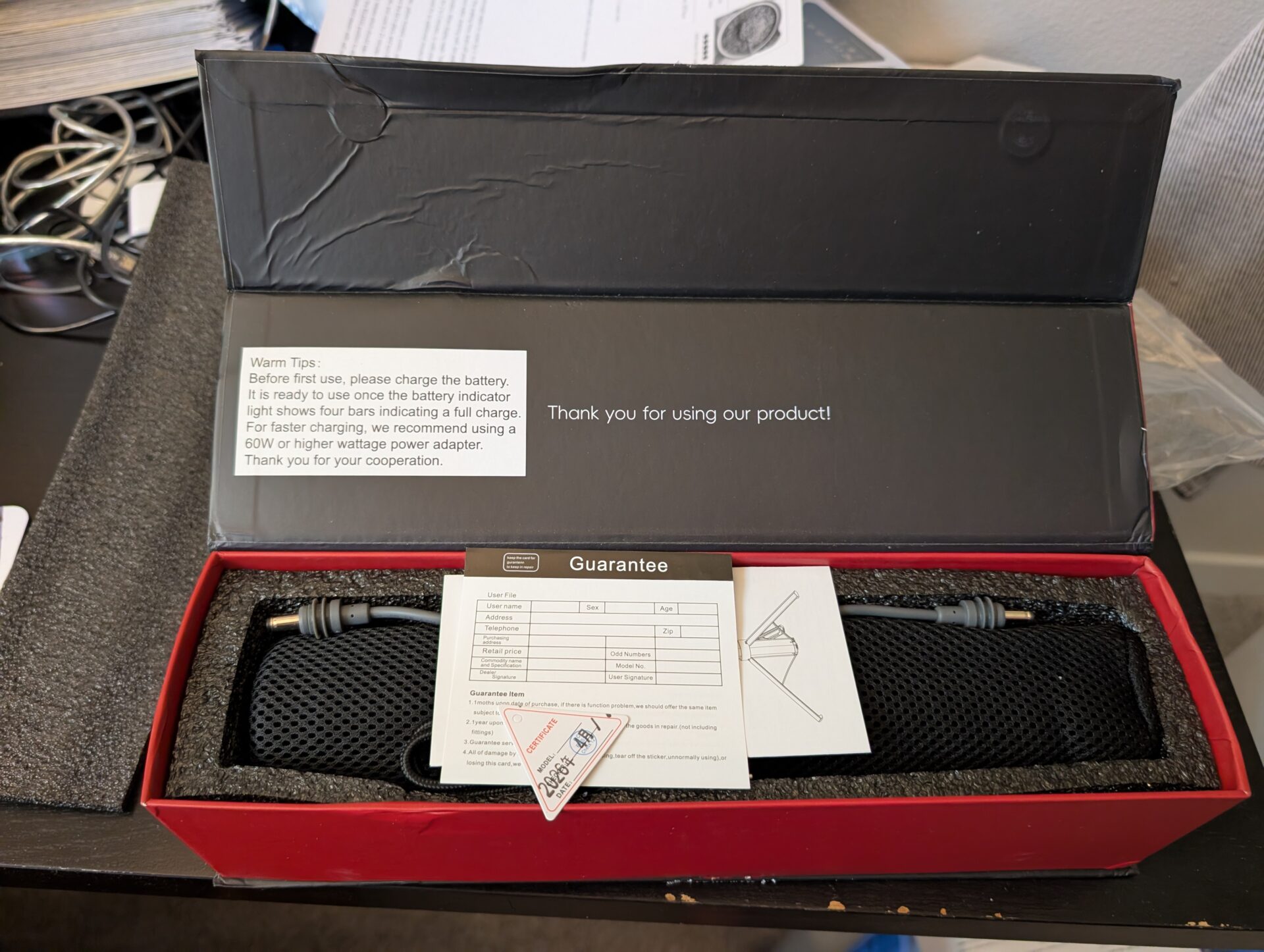
Starlink Mini is a great fit for camping, van life, and travel, but the power setup matters almost as much as the dish itself. I have been testing two different Starlink Mini battery options: the PeakDo LinkPower 2 and the Orbynexa PM166S. Both can power Starlink Mini off-grid, but they solve the problem in very different ways.
The PeakDo LinkPower 2 is the compact snap-on power bank that replaces the Mini’s kickstand. The Orbynexa PM166S is a larger tripod battery with an integrated stand. One is cleaner and more portable. The other has more battery capacity and a more complete field setup.
Quick verdict
If I wanted the cleanest portable Starlink Mini setup, I would choose the PeakDo. If I wanted the longest standalone runtime and a built-in stand, I would choose the Orbynexa. If I wanted the most flexible off-grid Starlink Mini setup for camping or van life, I would use them together.
Watch the full review
PeakDo LinkPower 2 vs. Orbynexa PM166S at a glance
| Feature | PeakDo LinkPower 2 | Orbynexa PM166S |
|---|---|---|
| Price | $229 | $239 |
| Battery capacity | 99Wh | 166.5Wh |
| Form factor | Snap-on battery that replaces the Mini kickstand | Integrated tripod power stand |
| Claimed runtime | About 5 hours | About 8 hours |
| Starlink output | Starlink power port | Starlink power port |
| Other output | USB-C PD up to 65W | USB-C PD up to 65W, 100W max combined output |
| Extra features | Battery percentage, wattage, watt-hours, estimated runtime, and remote DC control in the app | Built-in tripod, 1/4″-20 mount, aluminum construction, USB-C charging for other gear |
| Best fit | Compact travel, van use, clean cable management | Longer runtime, stable stand, more integrated field setup |
PeakDo LinkPower 2: compact and purpose-built
The PeakDo LinkPower 2 is the more compact and specialized of the two. It is designed to snap onto the back of the Starlink Mini where the kickstand normally goes, which makes the whole setup feel cleaner and less cluttered. If your goal is to keep the system small and easy to move, that matters a lot.
What stands out about the PeakDo is how little friction it adds. Remove the factory stand, attach the battery, connect the short cable, and the Mini becomes a single compact unit. That makes it especially useful in a vehicle or any setup where cable clutter is a problem.
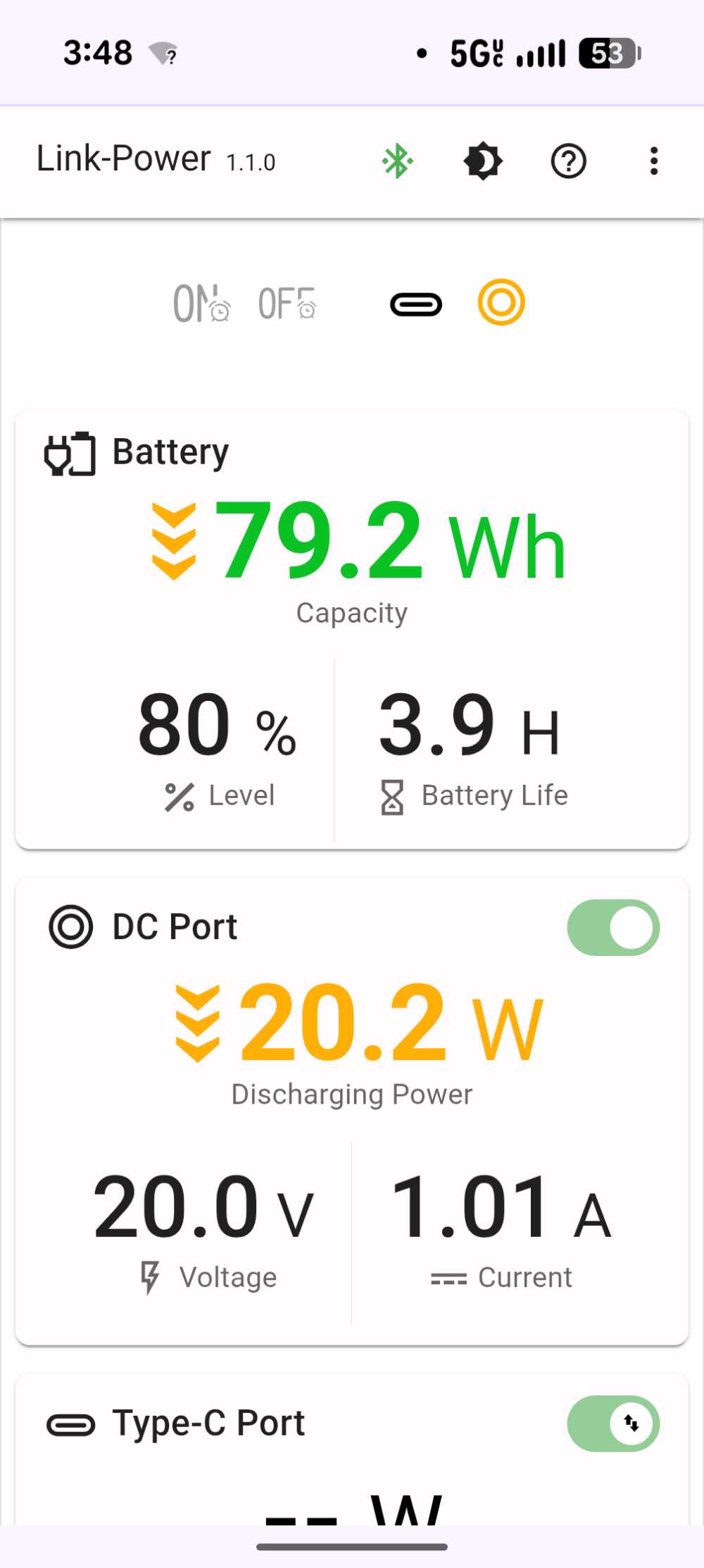
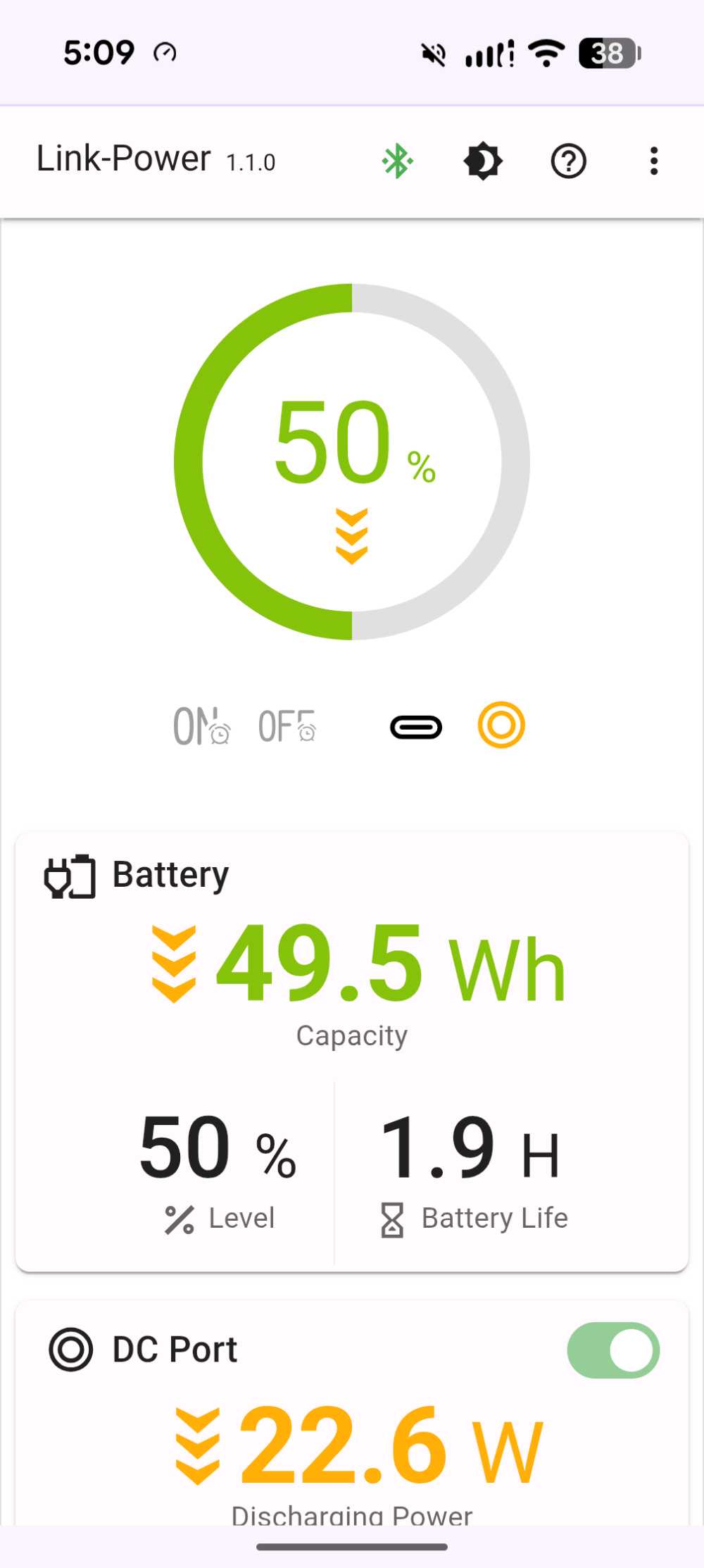
The app is another important part of the package. Instead of guessing how much power is left, you can see battery percentage, current draw, watt-hours remaining, and an estimate of runtime. You can also turn the DC output on and off remotely, which is useful if the Starlink Mini is outside, on a roof, or tucked somewhere inconvenient.
Orbynexa PM166S: bigger battery, built-in tripod
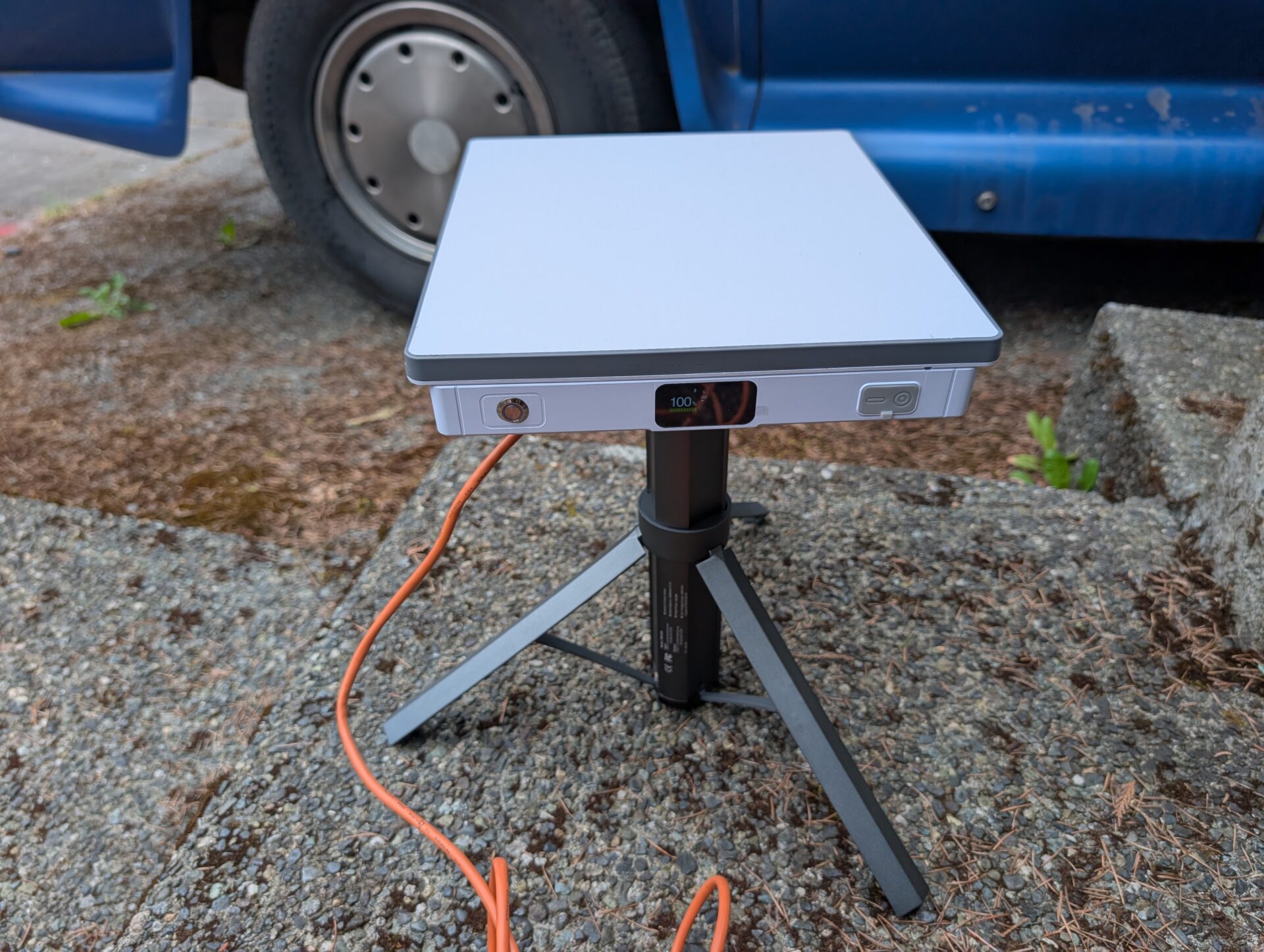
The Orbynexa PM166S takes a different approach. Instead of trying to be the smallest possible battery, it aims to be the most complete off-grid stand for Starlink Mini. It combines a battery, a tripod base, and the mount into one unit.
That design has a few obvious advantages. The biggest one is capacity. The PM166S uses a 45,000mAh / 166.5Wh battery, which is significantly larger than the PeakDo. It also includes a 1/4″-20 mount and USB-C PD output up to 65W, with 100W max combined output. In other words, it is not just a Starlink Mini tripod battery. It can also charge phones, tablets, cameras, and other USB-C gear.
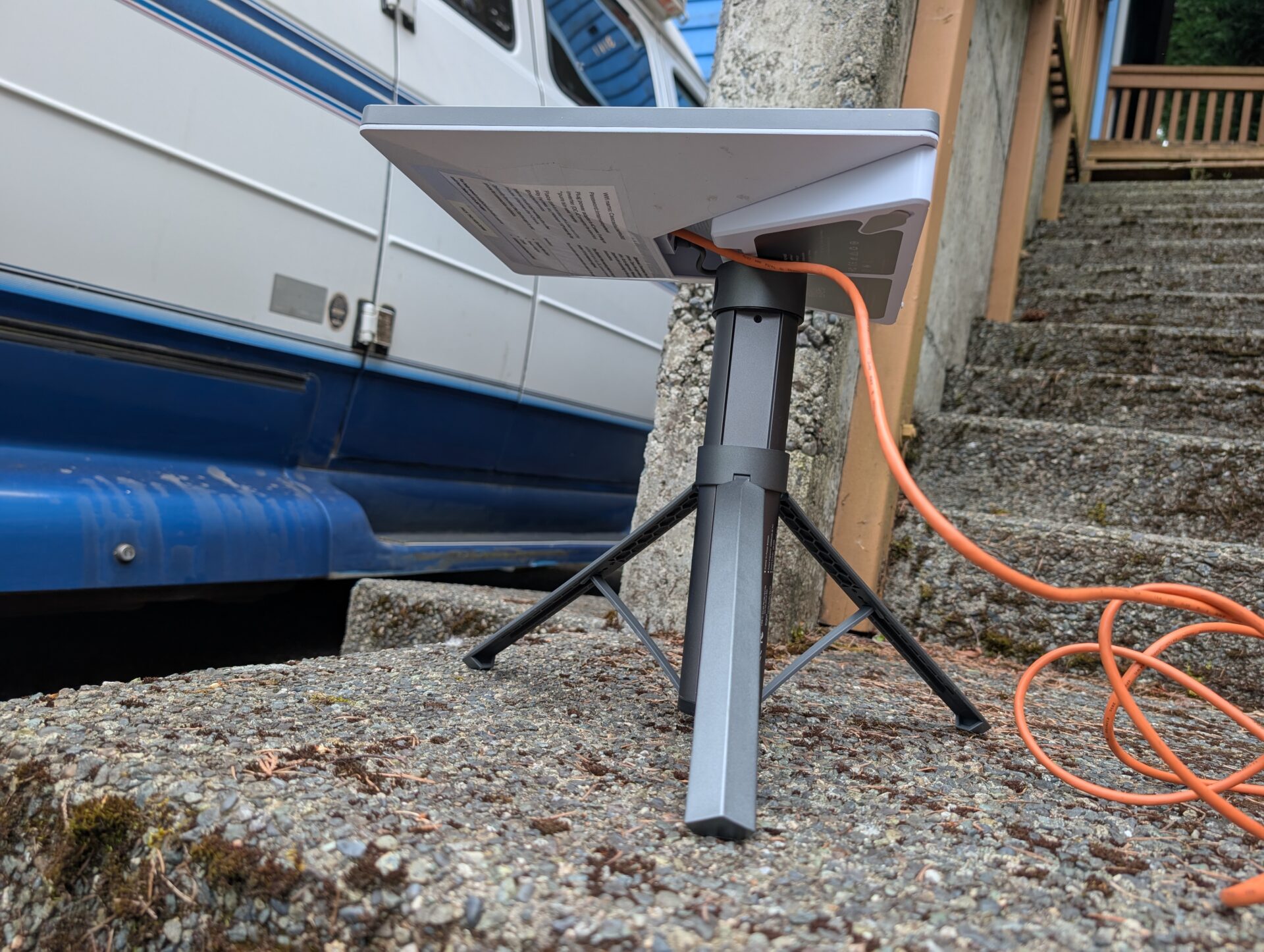
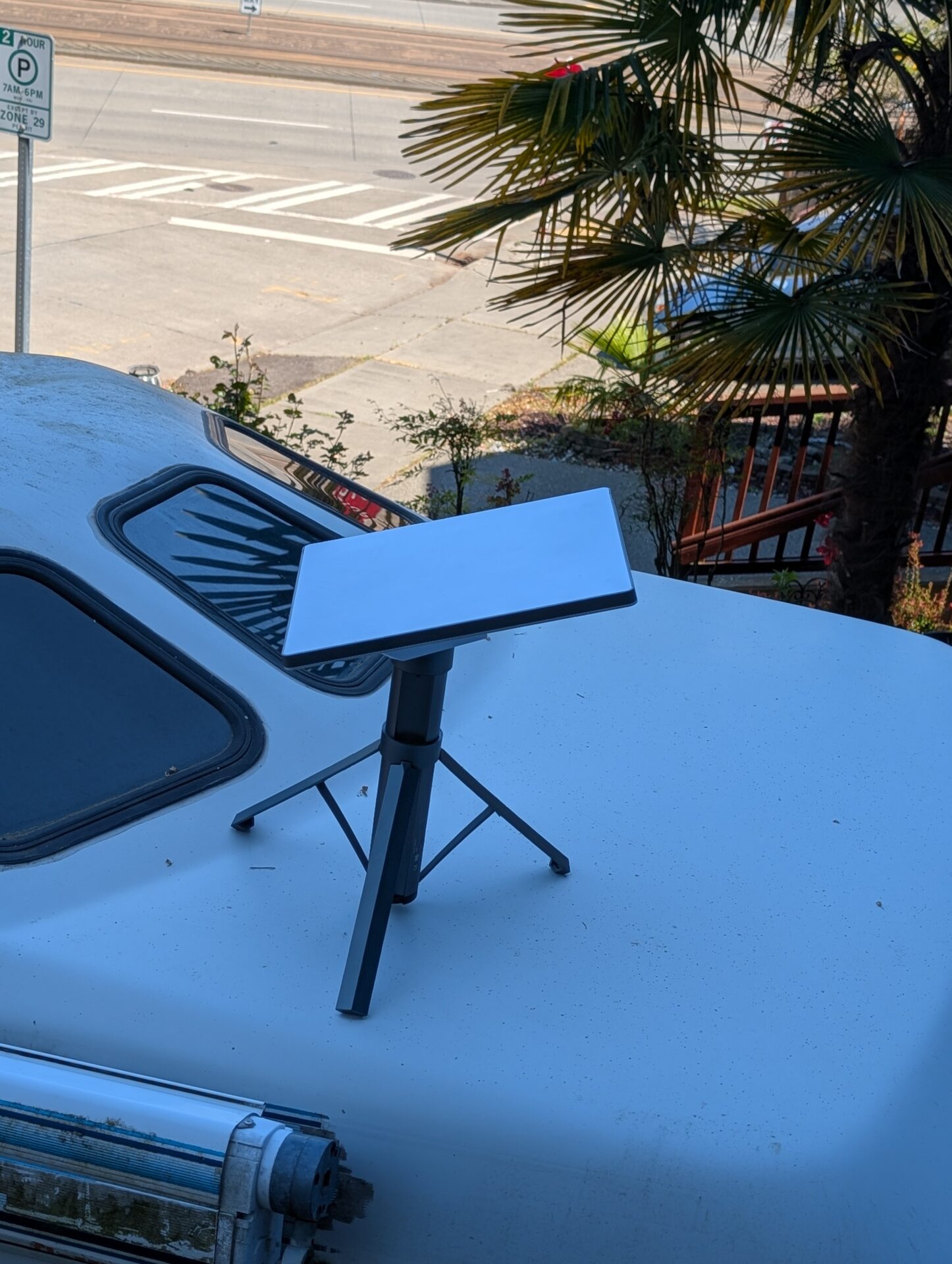
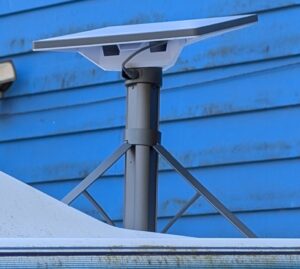
The main benefit here is simplicity once it is deployed. Instead of attaching a battery and then separately thinking about the stand, the PM166S gives you a single integrated unit that is ready to unfold, power on, and use.
Real-world runtime tests
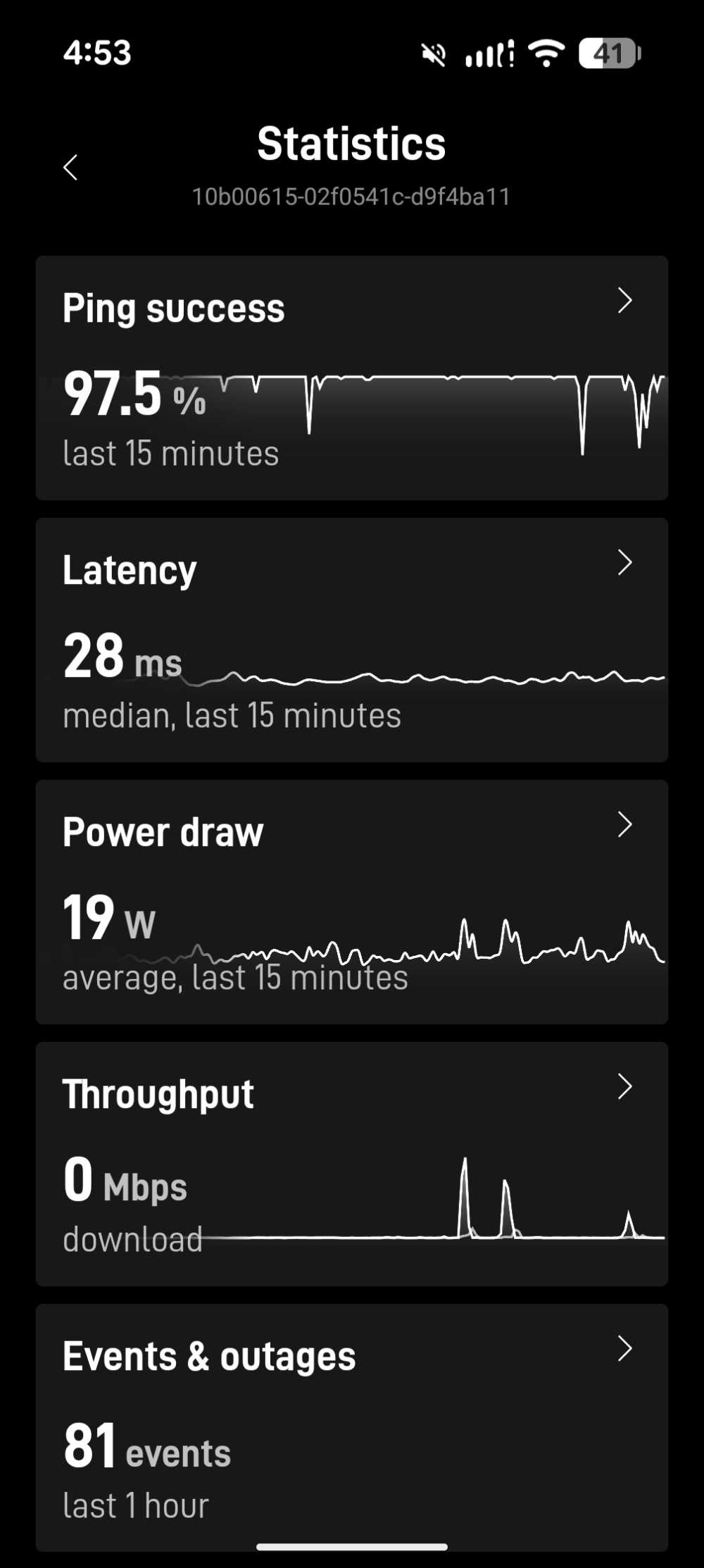
Manufacturer claims are useful, but real use is what matters. Starlink Mini power draw can change depending on startup, obstructions, weather, data use, and whether the dish is actively searching or already connected. These numbers are from my own field testing, so they should be treated as practical results rather than lab measurements.
| Test | Result |
|---|---|
| Orbynexa tripod battery on Mini alone | 8 hours, 44 minutes |
| PeakDo in bypass mode with tripod battery attached | 14 hours, 21 minutes total |
| Tripod connected to PeakDo, non-bypass mode | 13 hours, 7 minutes |
Those numbers tell the story clearly. The Orbynexa has the bigger battery and gives you the longer standalone runtime. The PeakDo is the smaller, more compact unit, but it becomes much more interesting when it is part of a larger power chain.
Bypass mode vs. non-bypass mode
The bypass setting matters because it changes how power flows through the system. In non-bypass mode, the tripod battery charges the PeakDo, and the PeakDo powers the Starlink Mini. That works, but some energy is lost in the charging process.
In bypass mode, the PeakDo lets the external battery feed the Starlink Mini more directly. When the external battery is drained, the PeakDo can take over from its own internal battery. In my testing, that bypass setup lasted longer than the non-bypass setup.
Why the PeakDo still stands out
The PeakDo is the better pick if you care most about compactness. It is a cleaner, more integrated solution when you want Starlink Mini to feel like a single portable unit instead of a stack of parts.
It also gives you more information on screen than the tripod battery does. That can be useful if you like to monitor the setup closely, especially while traveling or working from the road.
Why the Orbynexa stands out
The Orbynexa is the better pick if you care most about runtime and a built-in stand. It is bigger, but it also feels like a more complete off-grid package out of the box.
That makes it a better fit if you want something you can drop onto the ground or a campsite table and get going quickly without building the setup from separate pieces.
When the two work best together
The most interesting setup is not really one or the other. It is the two together. If you combine them, you get the PeakDo’s cleaner app-driven power behavior plus the Orbynexa’s bigger battery and integrated tripod form factor.
That is the setup I would choose if I wanted the least worry about battery life while camping, van dwelling, or staying out in the field for a long day.
Bottom line
These are not really direct clones of each other. The PeakDo is the cleaner, more compact, more technical option. The Orbynexa is the larger, more self-contained option with more capacity and a built-in tripod.
My takeaway is simple:
- Choose PeakDo if you want compact and tidy.
- Choose Orbynexa if you want longer runtime and an integrated stand.
- Choose both together if you want the most flexibility and the least worry about battery life.
Buy links
Specs referenced from the official PeakDo LinkPower 2 and Orbynexa PM166S product pages.